
A dealer turns a card while a timer counts down elsewhere on the screen. At a neighbouring table, a wheel is still spinning after the choices have closed. A live casino round has several clocks: the visible action, the time allowed to choose and the moment a result is recorded. Understanding their order gives the table its rhythm.
Before the dealer acts
The betting window marks when a selection can be submitted for a round. Once it closes, the dealer’s action continues on video and the game settles the accepted wagers. A shared roulette result can affect several players differently because their selections differ. A blackjack table may also present individual hand decisions, depending on the version and its rules.
The IviBet homepage discusses live tables and shows outside catalogue references for roulette and blackjack. It also says its account panels are previews and account access, real-money games and transactions are not connected in this version. A reference card is therefore not proof that this publication operates an available live table.
In a functioning service, the accepted-wager display and round reference would be important records. Video can show the ball or cards without showing every player’s selection or the precise moment a wager was accepted. The visible stream and the account record answer related but different questions.
Different games, different decisions
Roulette brings the table together around one visible event: a ball comes to rest and the room has a shared result. Blackjack has a more intimate rhythm, with attention moving between individual hands and the dealer. Baccarat places two hands at the centre of the scene. Each creates a different sense of pace, even when the same green table and camera framing appear around it.
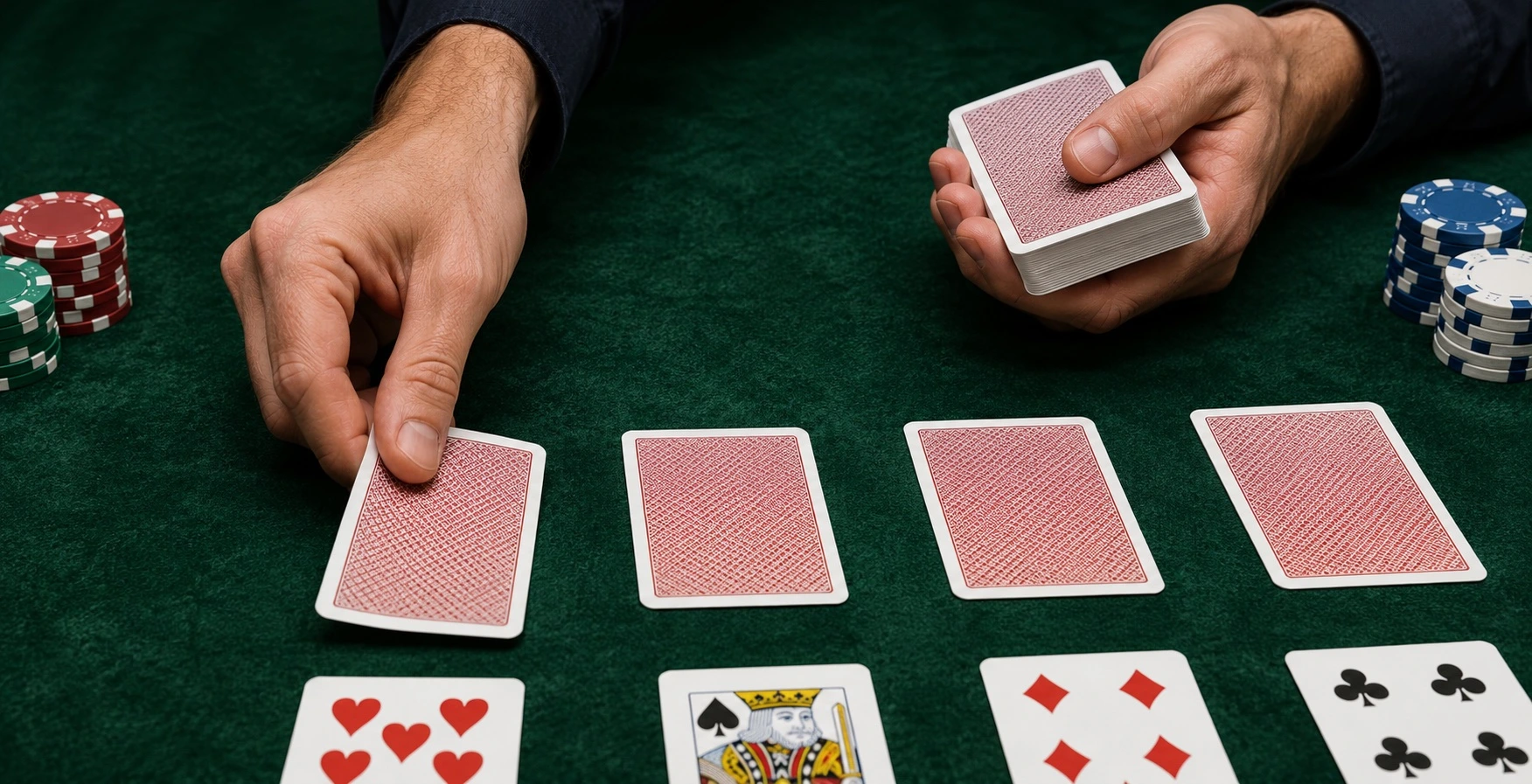
A physical table also has a language of gestures. A dealer gathers cards, turns one face up or waits while a wheel finishes its movement. These familiar actions give a round a beginning and an end. In a live presentation, a timer and screen controls add another layer around that physical sequence.
Camera angles shape what a viewer notices. A broad shot can show the table and dealer together; a closer view makes the cards or wheel easier to see. The screen may also show a history or table information beside the picture. Each part presents a different aspect of the same round.
Table names can describe families of games rather than one identical version. The pace, presentation and rules can vary across versions. A familiar name therefore leaves room for a different atmosphere, from a quiet table with few visual distractions to a brighter studio setting with more activity around the central event.
A familiar name may have variants
Teen Patti centres on three-card hands, while Andar Bahar uses a reference card and a matching-card format. Their short rounds can be easy to follow, but the named table may add side wagers or use a particular payout schedule. Check the hand ranking, side-bet terms and handling of special outcomes for the version being viewed.
Each component of a round can settle separately. A side wager may win even when a main wager loses, or the reverse. Looking only at the winning component can hide the total amount placed across the table. The complete round record puts each selection beside its own result.
The numbers after the action
After the visible action, the result becomes part of the round’s record. This quieter moment has its own rhythm: the movement has stopped, the screen reflects the outcome, and the next round has not yet begun. The transition is part of what makes a table feel continuous rather than a string of unrelated images.
The video and a service’s records can show different aspects of an event. A picture may show the card or the ball clearly while not showing every participant’s selection. A pause in a stream does not itself determine what happened during the missing moment.
Thinking of a live table as a sequence helps explain its character. There is anticipation before the action, a shared event at its centre and a brief pause after it. Roulette, card tables and other formats arrange these moments differently, which is why their pace can feel so distinct.
Reading a busy screen
On a phone, video and surrounding information share a much smaller frame. The dealer may remain central while the table surface, controls and context move around it. The same round can therefore feel more immediate on a small screen than it does in a broad desktop view.
A live presentation has a social visual language even for someone watching alone: a person’s hands, a shared table and a sequence that continues from one round to the next. That human scale is different from the solitary grid of a slot. Neither presentation changes the uncertainty of a wager.
For adults who choose to gamble, the money staked can be lost. Giving time and spending a personal limit leaves room to enjoy the visual story without treating a fast-moving round as a reason to continue.
The whole round is the story
A live table combines a visible event with selections, rules and settlement. A player who follows all four has a clearer picture than one who watches only the ball or the final card.
Is the video the complete wager record?
No. It shows the action at the table but may not establish the accepted selection, timing or account settlement. Those details belong in the service’s round and transaction records.